Best-of roundup
Best Cleansers for Oily & Acne-Prone Skin
The best cleanser for oily skin removes oil and sunscreen without leaving your face tight. For oily, acne-prone skin, a salicylic-acid wash can help clogged pores; for oily, sensitive skin or a routine with acne medication, a gentle wash may fit better.
Use the subtype guide below to choose a cleanser job, then compare our catalog picks. Customer ratings help describe shopping experience; they do not prove that a wash will treat your acne.[1][2]
Catalog products ordered by customer rating and review volume, with recent purchase volume and estimated price as tie-breakers. Roles describe formulas, not clinical winners. Affiliate links, no paid placements. Full methodology & sources.
By the Find My Skin Routine editorial team · Updated quarterly · Last updated November 4, 2026 · How we pick & sources
CeraVe Foaming or Renewing SA: start with the cleanser job
Foaming Facial Cleanser is the daily cleansing option; Renewing SA adds salicylic-acid exfoliation. Our side-by-side CeraVe comparison separates these jobs and explains what the manufacturer’s ingredient lists establish.[3][4]
Use the table’s routine roles to shortlist one wash. Customer-feedback order is not a personalized recommendation, and the lowest pack price is not automatically the best value.
Match the face wash to the rest of your acne routine
Oily skin and oily acne-prone skin do not need the same default treatment. CeraVe Foaming Facial Cleanser is a gentle-wash example in our catalog; CeraVe Renewing SA Cleanser and La Roche-Posay Effaclar Medicated Gel Cleanser list salicylic acid. Choose one wash, not a sequence of all three.
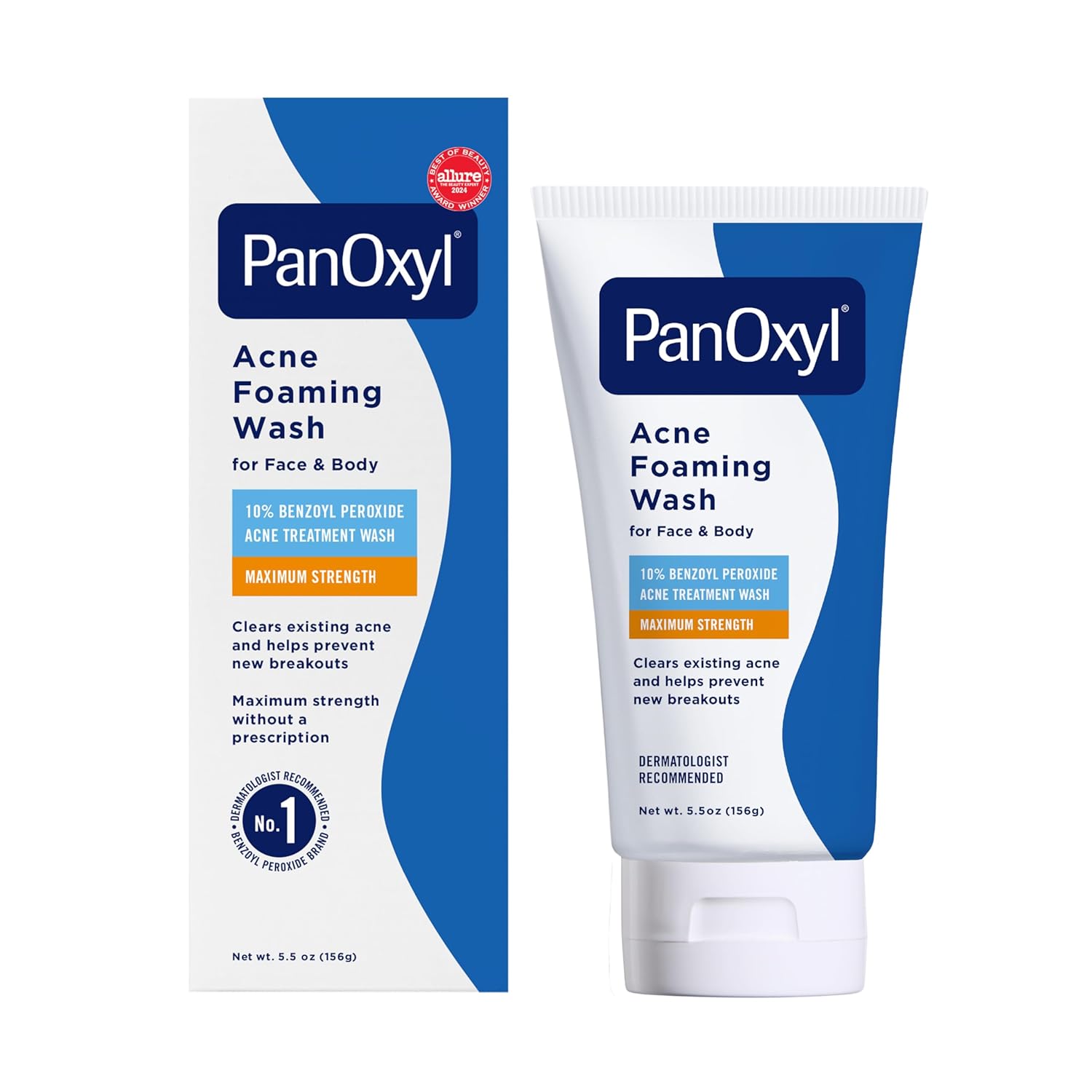
If you already use adapalene, benzoyl peroxide or another drying leave-on, the gentle option can be the more useful support step. PanOxyl 10% Benzoyl Peroxide Acne Foaming Wash is also in the comparison, but its concentration is not a reason to treat it as the best first wash for every oily face. Check drug-label directions and avoid duplicating actives. If you are deciding between those two actives, the benzoyl peroxide versus salicylic acid comparison explains what each does and who should skip which.
For a full plan, use the oily acne-prone routine. The salicylic acid guide explains when a wash and a leave-on serve different needs.
Oily, sensitive and acne-prone: choose comfort first
When shine, breakouts and stinging occur together, start with a fragrance-free cleanser without an acne active. Vanicream Gentle Facial Cleanser is a catalog example; it does not list salicylic acid, benzoyl peroxide or niacinamide in the catalog’s ingredient summary. That is a narrower choice of variables, not a guarantee against allergy.
If niacinamide suits you, the catalog also includes La Roche-Posay Toleriane Purifying Foaming Facial Cleanser. You do not need a separate niacinamide serum just because the cleanser contains it. See what niacinamide adds and the gentle oily-sensitive routine.
If every wash burns, adding a stronger acne cleanser is unlikely to solve the immediate problem. Simplify and seek advice for continuing rash or irritation. Sensitive acne-prone care keeps treatment selection separate from the daily support products.
Oily and dehydrated, blackhead-prone or red: different next steps
For shine plus tightness or flaking, prioritize a gentle wash and moisturizer. The dehydrated-skin guide addresses hydration without assuming that oily skin needs a rich cream everywhere.
For blackheads, a salicylic-acid cleanser is one option, but visible pores are not all clogs. Use the blackhead routine before repeatedly scrubbing your nose. For persistent redness, choose gentle care and consider evaluation rather than assuming a medicated cleanser will treat the cause.
How often to cleanse, and where it fits morning and night
Wash gently up to twice daily and after heavy sweating; use fingertips, lukewarm water and no scrubbing. More washes are not automatically better for oily skin. Follow the specific label for an acne wash rather than applying generic contact times.[1]
Morning cleansing is followed by moisturizer and sunscreen, with optional treatment according to directions. Evening cleansing removes sunscreen before treatment and moisturizer. The routine-order guide explains the exceptions. A cleanser should not leave skin burning, peeling or uncomfortably tight.
Choosing a cleanser for oily, sensitive, and acne-prone skin
For oily skin
A gel or foaming cleanser can feel more comfortable when excess oil, sweat, or sunscreen build up during the day. The useful test is not how “stripped” skin feels after rinsing; it is whether skin feels clean and comfortable enough to moisturize afterward.
For oily but sensitive skin
Oily skin can still be reactive. Start with a gentle, fragrance-conscious formula before adding a strong acne wash, and change one variable at a time. If every wash stings or leaves scale around the nose and mouth, simplify the routine rather than escalating the cleanser.
For acne-prone skin
A salicylic-acid or benzoyl-peroxide cleanser may fit an acne routine, but it is only one tool. Because a wash is rinsed off quickly, avoid stacking it immediately with several new drying leave-on treatments. Choose a formula your skin can use consistently, then add treatment steps deliberately.
Who should skip, patch-test, or ask a dermatologist
Skip strong medicated cleansers when your barrier is burning, peeling, or newly sensitized. If acne is cystic, scarring, or painful, cleanser choice alone will not be enough and medical acne care is the smarter next step.[2]
Patch-testing is especially important if you have sensitive skin, eczema history, fragrance allergy, frequent rashes, or a pattern of products that sting on contact. Product roundups can narrow the field, but they cannot diagnose acne, dermatitis, melasma, rosacea, infection, or a suspicious lesion.